Call Scoring Accuracy: Why Cold Calls Get Miscategorized
Cold calls get miscategorized by AI scoring because scorecards built for demos score the wrong criteria. Here’s how to fix it with the right rubric per call type.

Why cold calls get miscategorized by AI scoring tools
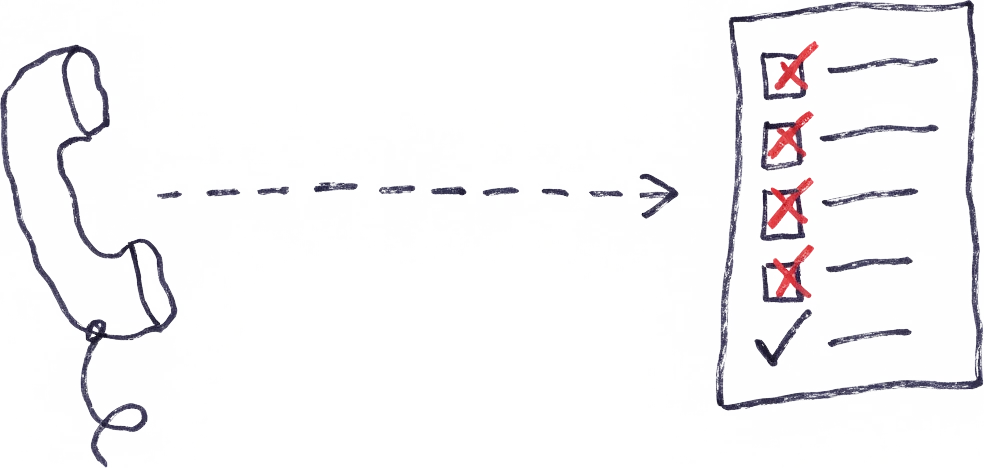
Cold calls get miscategorized because most AI scoring tools apply one scorecard to every call type. A MEDDIC or BANT rubric built for a discovery meeting penalizes a 90-second cold call for not uncovering a decision process, a metric, or a budget — things no SDR could get on a first dial. The call looks like a failure in the dashboard. The rep gets coached on the wrong behavior.
Cold calls need their own scorecard. Score them on the behaviors that drive a booked meeting — opener, pattern interrupt, pain hook, ask for the meeting — not on qualification criteria built for a 45-minute discovery call. Then score every call automatically so reps self-coach between dials, not three weeks later in a 1:1.
The real problem: one scorecard, many meeting types
Most AI sales coaching tools score every recorded call against the same rubric. That’s convenient for the vendor and useless for the rep. A single SDR might run five meeting types in a day: cold outbound, warm callback, inbound discovery, demo, and a champion check-in. Each one has a different definition of “good.”
Here’s what happens when you force a MEDDIC scorecard onto a 90-second cold dial:
| MEDDIC criterion | What a demo call needs | What a cold call can do |
|---|---|---|
| Metrics | Quantified business impact | Not applicable — no discovery yet |
| Economic buyer | Named + confirmed | Not applicable — you haven’t earned the right |
| Decision criteria | Documented | Not applicable |
| Decision process | Mapped | Not applicable |
| Identify pain | 2-3 validated pains | Surface one pain hook that earns the next meeting |
| Champion | Mobilized internally | Not applicable |
Score a cold call against six criteria it was never meant to hit and the rep’s coaching score collapses. Managers see red dashboards. Reps stop trusting the tool. Nobody fixes the opener, the pattern interrupt, or the ask.
A discovery scorecard cannot see a cold call. The behaviors that book the meeting are the opener, the pain hook, the permission ask, the objection, and the meeting ask. A discovery card scores a different conversation. Generic scoring misses those behaviors.
What a cold call scorecard scores
A cold call scorecard scores the five things that correlate with booking a meeting on an outbound dial. Not qualification depth. Not decision process. Not metrics. The mechanics of the 60-120 seconds you get.
1. The opener (first 10 seconds). Did the rep sound human, name the prospect, and give a reason for calling that isn’t “Did I catch you at a bad time?” Pattern interrupts that acknowledge the cold call outperform scripts that pretend otherwise.
2. The pain hook. One specific, named pain tied to the prospect’s role or company — not three. Cold calls that run full discovery die.
3. The permission ask. Did the rep ask for 30 seconds, get it, and respect the timebox? This is the biggest predictor of whether the call makes it to minute two.
4. Objection handling (the specific objection, not a generic rebuttal). “Send me an email” vs. “We already have a tool” vs. “Not interested” need three different responses. Scoring checks which one came up and how the rep handled that one.
5. The ask for the meeting. Specific day, specific time, two options. Not “Would you be open to learning more?”
Five criteria, scored in seconds, specific to the call type. Reps know what good looks like because the scorecard reflects what the call is.
How Demodesk fixes it: a scorecard per meeting type, scored automatically
Demodesk’s AI Coach scores every call against the scorecard that matches the call type. You build custom scorecards for cold calls, discovery, demos, negotiations, and champion check-ins. Each one scores on the criteria that matter for that stage of the conversation.
Three things make this work in practice:
Smart categorization decides which scorecard to apply. AI Assistant tags each meeting by type as soon as the recording lands, so cold calls get scored on cold-call criteria. No rep tagging, no manager cleanup. This matters because HubSpot phone call contamination — logging every dial as a “meeting” — is the most common reason cold-call scores look wrong in a CRM-driven view. Smart tagging separates the dial from the meeting.
Instant post-call scoring, not next-week review. The scorecard is in the rep’s inbox within seconds of the call ending. They self-coach between dials, not three weeks later in a 1:1. That’s where the 1:50 manager-to-rep ratio comes from — reps don’t need a manager in the room to improve on the obvious things.
Custom scorecards without a consultant. You describe what a good cold call looks like for your team, Demodesk builds the scorecard. If your product changes the opener or your market shifts the pain hook, you edit the rubric in-app. No six-week implementation.
The result most teams see: cold call scores stop looking like failure signals and start showing coachable patterns. A sales lead at a German B2B company put it this way: “Performance improvements driven by closer and more effective coaching, enabled through call recordings and transcripts, resulting in faster response times and more detailed follow-ups.” Rep-level coaching at scale, not manager backlog.
What to measure on cold calls
If you’re setting up cold call scoring from scratch, measure these — and nothing else — for the first 90 days:
| Metric | Why it matters | Good benchmark |
|---|---|---|
| Connect rate | Dial efficiency, list hygiene | Score it on a cold-call card, not a discovery card |
| Conversation rate | Opener strength — did they stay on past 10 seconds | 58% of connects per Voxbooster 2026 |
| Meeting booked per conversation | The outcome | 4.6% average, 16.7% top quartile (Gong) |
| Scorecard average | Behavior consistency | Internal — track trend, not absolute |
Drop everything else from the dashboard. Cold calls do one job: book the next meeting. Scoring that measures anything else is noise.